


Here we will present, how our cost accounting services empower New Zealand businesses to move beyond basic bookkeeping by focusing on internal efficiency and expense optimization. While traditional financial accounting looks backward for compliance, cost accounting provides a real-time, in-depth view of how every dollar affects the bottom line.
Key Takeaways for Business Growth:
- Surgical Cost Tracking: Using modern accounting software, firms can distinguish between fixed costs (leases, insurance) and variable costs (materials, labor) to create more accurate budgets.
- Precision in Pricing: Through cost allocation and process costing, businesses can equitably assign indirect costs to specific products or services, ensuring pricing strategies are based on true profitability.
- Advanced Optimization: Techniques like Activity-Based Costing (ABC) and Standard Costing help identify exactly where the production process is losing money or where overhead is being misapplied.
- Maximizing Contribution Margin: By analyzing the contribution margin, owners can see how much revenue remains after covering variable expenses to fund growth and net profit.
- Internal Strategic Insight: Unlike standard financial reporting (GAAP), these internal income statements serve as a “narrative” for the business, replacing assumptions with data-driven certainties.
Ultimately, we frames cost accounting as a competitive necessity in the NZ market, transforming accounting from a “compliance hurdle” into a powerful tool for cost control and sustainable financial success.
Maximizing Profitability: How Cost Accounting Can Benefit Your New Zealand Company
New Zealand has many businesses, and competing for customers requires more than finding revenue opportunities like other countries. The element that has more importance than revenue is understanding every dollar spent. Cost accounting services act as a significant asset in these situations, helping firms track costs with surgical precision. It is a handy form of accounting that depicts more than a profit and loss statement. By utilizing modern accounting software, we provide a much more in-depth view specific to your business’s expenditures. Monsta Tax and Accounting is not a mere bookkeeping firm. We delve deep into your financials to find opportunities to optimize your cost structure, enhance profit margins, and achieve sustainable financial success. We believe in transforming your practices from a compliance-focused function to a value-added activity using integrated accounting packages.
The Unique Role of Cost Accounting in Financial Strategy
Among all the fields of accounting and financial administration, cost accounting is the most unique because of its focus within a firm. Other forms of accounting, along with financial statements such as the balance sheet and income statements, provide a one-sided view of the firm. Professional accountants recognize that while financial reporting is vital for stakeholders, cost analysis provides insights from the present rather than hindsight. Cost accounting services enable decisions to be made by focusing on identifying, measuring, and analyzing specific types of costs within a production process.
Our professional accountants ensure that each cost in the production process is monitored for accurate cost control and the overall financial health of the firm. By implementing marginal costing techniques, we can better understand how each unit affects your bottom line.
Classifying and Managing Different Types of Costs
Cost accounting outlines the concept of classifying various types of costs. A distinction of this nature is the first and foremost step towards any efficient cost control. Let’s revisit the multiple categories of your production costs.
Fixed vs. Variable Expenditures
For instance, some expenditures are classified as fixed costs, which do not change in relation to your volume of production. Think of the factory lease and insurance premiums. Our accounting services ensure these fixed costs are managed effectively through robust accounting packages.
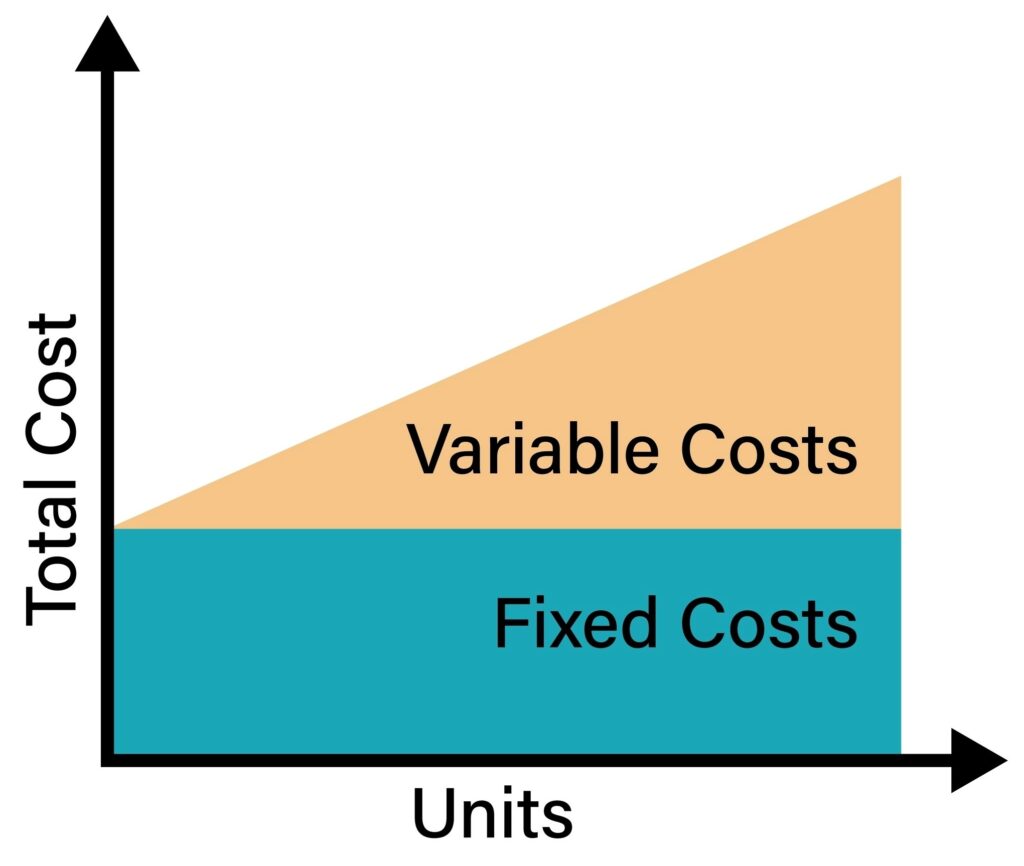
On the other hand, some expenses are termed variable costs, which increase along with production volume, such as direct material and direct labor. Our accounting services use specialized accounting software to track costs of this nature so you have a clear picture of your expense structure. This distinction between fixed costs and variable costs is essential for constructive budgeting and strategic decision-making. To achieve the best contribution margin, a company must keep these variable costs under a strict cost control regime.
Solving the Challenge of Indirect Cost Allocation
Firms also incur indirect costs in addition to direct expenses. Such fees are necessary to keep the business running; however, they cannot be associated directly with given products or services. These indirect costs may include salaries of support staff, fuel, power, and office consumables.
Precision in Cost Apportionment
The problem arises in the equitable cost allocation of these indirect costs across a wide range of products or services. Improper cost allocation can bias pricing strategies. Our cost accounting services minimize this problem by using process costing to ensure that every stage of production is accounted for. We use accounting software to assign costs to the correct departments, ensuring that your income statements reflect the true profitability of your products or services.
Advanced Techniques: ABC and Standard Costing
The most difficult and complex costs to deal with are likely the indirect costs of running the business. Managing overhead is a crucial aspect of business strategy, and we help you track costs related to communication, advertising, and high-level promotions.
Activity-Based Costing (ABC)
Rather than assuming all overhead is equal, Activity-Based Costing (ABC) helps us assign costs based on specific activities. If one of your products or services requires more machine setup, we will assign costs to that specific line. This ensures production costs are accurate. This method allows professional accountants to identify which activities are subsidizing unprofitable production.
Standard Costing and Process Costing
In standard costing, each unit is assigned a predetermined cost. Our accounting services then measure actual production costs against this standard. If actual costs exceed the standard, our team helps you find the discrepancy within the production process, whether it’s due to high variable costs or lethargy. Furthermore, for continuous manufacturing, we utilize process costing to monitor the flow of value through each stage.
Informed Decision Making and Contribution Margin
Informed cost accounting involves providing data to aid the entity’s decision-making. The analysis we provide enables you to make refined pricing and product line pruning decisions. By analyzing the contribution margin of each item, you can see how much revenue remains after covering variable costs to put toward fixed costs and profit.
Our accounting services focus on maximizing this contribution margin for all your products or services. We use marginal costing to determine the impact of producing one additional unit, which is a feature often missing in standard financial reporting.
Internal Insights vs. External Financial Reporting
Unlike standard reports, which provide the bare minimum, our cost accounting services capture the essence of your business narrative. While financial reporting must follow GAAP for stakeholders, our internal income statements focus on cost control and growth metrics.
We assist with every layer of accounting, from basic bookkeeping using accounting packages to the most complex process costing analysis. Our professional accountants analyze your fixed costs and variable costs over specific periods to determine the impact of every decision.
Strengthening Your Financial Foundation in NZ
Grasping the intricacies of your production costs in New Zealand is strategically vital. We help you better understand your production costs, including overhead, fixed costs, and variable costs. This allows you to deploy money in business investments that drive value.
By using marginal costing, we help you understand the relationship between sales volume and price. Our team will assign costs accurately to ensure your income statements are a true tool for growth, not just a historical record. We help you track costs across all types of costs to maintain a healthy contribution margin.
Conclusion: Unlock Your Competitive Edge
In closing, the use of advanced cost accounting services goes far beyond just keeping a business’s books; it arms the owner with actionable insights. We use accounting software to assign costs efficiently and optimize your production process.
Our accounting services will help you assign costs where they belong, streamline your production costs, and enhance your financial reporting. We believe in the importance of the foundation on which you build your income statements. By replacing presumptions with certainties through marginal costing and cost allocation, we help you reach a competitive edge. Let us help you track costs, manage your types of costs, and improve your contribution margin for a profitable future.

Frequently Asked Questions (FAQs)
Q: What is the main purpose of cost accounting according to the article?
A: The main purpose of cost accounting is to go beyond standard financial reporting to provide detailed insights into a business’s expenses, helping to optimize cost structure and boost profitability.
Q: How does cost accounting differ from traditional financial accounting?
A: Traditional accounting and financial statements show what happened in the past, while cost accounting provides real-time data for making informed decisions for the future.
Q: What are the two main types of costs classified in the article?
A: The two main types of costs mentioned are fixed costs, which don’t change with production volume, and variable costs, which change in direct proportion to production output.
Q: How are “indirect costs” defined in the article?
A: Indirect costs are defined as expenses that are necessary for business operations but cannot be directly tied to a specific product or service, such as administrative salaries.
Q: What is the primary purpose of a business analyzing its “overhead costs”?
A: By analyzing overhead costs, a business can identify opportunities for efficiency and improve its bottom line without compromising quality.
Q: What is “standard costing”?
A: Standard costing is a method of cost accounting that involves setting a predetermined cost for each unit of product and then comparing it to the actual production costs to find variances.
Q: How does “activity based costing (ABC)” work?
A: Activity based costing (ABC) allocates overhead costs based on the specific activities that drive them, providing a more accurate picture of the true cost of each product.
Q: Why is it important to classify “types of costs”?
A: Classifying types of costs into fixed costs and variable costs is the first step toward effective cost control and is essential for accurate budgeting and strategic pricing.
Q: What kind of information does “cost accounting information” provide?
A: Cost accounting information provides the insights needed to optimize the production process, adjust pricing, and discontinue underperforming product lines.
Q: How does the article say Monsta Tax and Accounting’s cost accounting reports are different from an income statement or balance sheet?
A: The article says their reports are tailored to specific needs and go far beyond the summary data found in a standard income statement or balance sheet, providing more granular detail.
Q: How do the firm’s cost accounting reports relate to Generally Accepted Accounting Principles (GAAP)?
A: While financial reports are prepared according to Generally Accepted Accounting Principles (GAAP) for external use, the firm’s cost accounting reports are for internal use but are still based on solid accounting principles.
Q: How can a business use the insights from “cost accounting systems” to manage its “operating costs”?
A: Businesses can use the data from cost accounting systems to analyze their production costs and identify areas to reduce them and streamline their production process.
Q: Why is properly allocating “indirect costs” important?
A: It’s important because incorrectly allocating indirect costs can lead to flawed pricing and a poor understanding of a product line’s profitability.
Q: What is the key to sustained profitability, according to the article?
A: The key to sustained profitability is effectively managing types of costs.
Q: What is the significance of the “income statement” in traditional accounting?
A: The income statement is a standard accounting and financial statement that, along with the balance sheet, tells you what has happened in the past.
Q: How does the article define “production costs”?
A: Production costs are defined as the costs associated with producing a good or service, which can be broken down into various categories like fixed and variable costs.
Q: What is the relationship between “cost control” and a business’s success?
A: The article states that cost control is a crucial part of a company’s financial health and is a non-negotiable aspect of business success.
Q: What happens if actual costs are higher than the standard costing?
A: If actual costs are higher than standard costing, the firm will help clients investigate the reasons, which could be due to wasted materials, inefficient labor, or other factors.
Q: What is the purpose of the “balance sheet” in accounting?
A: The article mentions the balance sheet as one of the traditional accounting and financial statements that tell a company’s past financial story.
Q: What is the overall message of the article about cost accounting?
A: The overall message is that cost accounting is not just an accounting service but a strategic tool that helps businesses take control of their cost structure to build a stronger and more profitable future.